
According to the Wall Street Journal, large enterprises such as Wal-Mart, Amazon, Expedia and a number of airlines are considering issuing their own stabilization currency for daily consumer purchases. The aim is to reduce reliance on traditional banking and credit card networks, reduce transaction fees and speed up payments.

Stabilizing currency as a digital currency for stable assets, such as anchoring the United States dollar, can save retailers 1.5 to 3 per cent of transaction costs and accelerate the settlement of funds, potentially saving billions of dollars annually. In the case of the Amazon, even small tariff cuts would yield significant gains under the size of its net income of $638.0 billion in 2024.

The movement of retailers to issue digital currency is a direct threat to Wissa and to the long-standing pattern of payments. (b) Stimulates the rapid reaction of investors and delays the relevant financial units. U.S. transport fell by 2 per cent, first capital by 3 per cent, Bebo by 2.6 per cent and Block by 2.4 per cent. The market is worried about stabilizing the spread of currency and the possible diversion of traditional card network transactions.
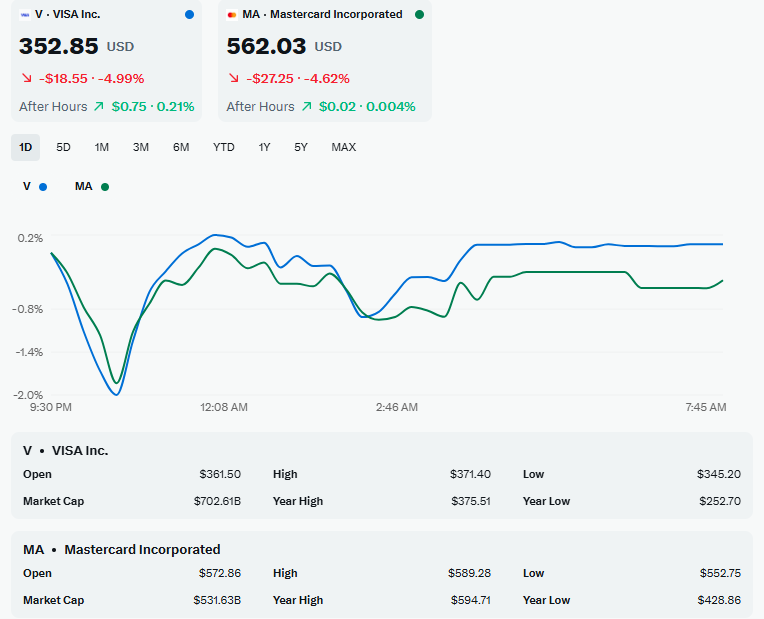
The United States legislative process has also helped to stabilize the currency. The Stability Currency Regulatory Framework Act (GENIUS Act), which recently passed the Senate ‘ s key procedural votes, requires that the issuer of the stability currency provide full reserves and be subject to federal or state supervision, and is expected to provide legal security for retailer schemes.

Despite pressure, Visa and MasterCare remain resilient with diversified sources of income and seek transformation through the integration of block-chain technology and collaborative participation in the currency stabilization project. However, the construction of an ecological vision of independent payments by retail giants heralds a paradigm shift in the way consumption payments are treated and is challenging the long-standing pattern of double-headed monopolies in the payment sector.
