In the money-for-the-morning market, small advertisers are often hard to shake a large, well-funded capital. However, according to reports from outside sources, the electrician dominant Amazon appears to have recently withdrawn from the Google Shoping Ads competition, provoking the old pattern, opening up opportunities for competitors and giving rise to many speculations by industry observers.
Google Shoping Ads has a core function, the bid Insights tool. It shows the top 10 advertisers of the exposure share in a given search environment. Owing to the wide range of products covered by the Amazon retail trade, it has been at the forefront of these lists for years. “They have been one of the most radical and stable advertisers in the field of shopping for many years,” said Heidi Sturrock, a consultant to OMG Commerce, “their presence sets a benchmark for the exposure share of many goods and the cost of each click”.
According to Mike Ryan, the research manager of the electric insight agency Smart Ecommerce, on 17 July, the Amazon ‘ s exposure to Google shopping in the United States was as high as 60 per cent and 55 per cent in the United Kingdom. However, since last week (23 July), the image of the electric giant has completely disappeared — This is a clear signal that it has almost completely withdrawn from the Google shopping market.
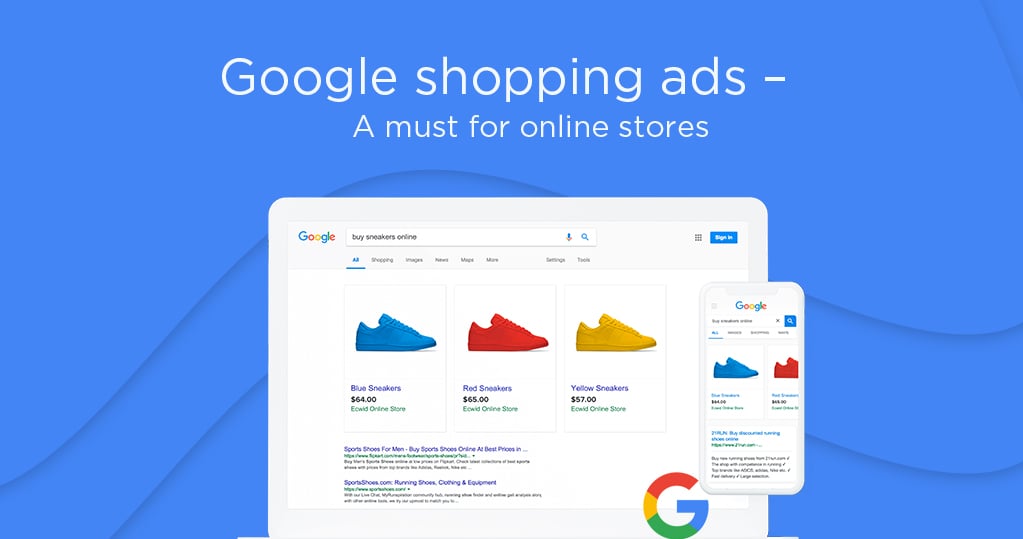
The reasons for the sudden interruption of this important media channel in the Amazon are not yet clear. It is worth recalling, however, that Google shopping is an instrument used by advertisers to capture consumers near the decision point of the purchase (the bottom of the conversion funnel). This form of advertising can be opened or closed relatively easily, adjusted to brand strategy.
Temu and Shein also withdrew from the search for advertising markets earlier this year as a sign of spending cuts in response to rising costs. Ballard noted that while the Amazon was not in the same position, it was not the first time in the year that it had cut advertising expenditures in this way.
“In the middle of the second quarter of this year, Amazon had a reduction of about three weeks in the Google bid, followed by an increase in input on the eve of membership day (Prime Day), particularly during membership days,” Ballard explained.
This operation in the Amazon triggered widespread speculation by market experts about its motives. Ryan ‘ s analysis of the British leadership suggests that spending cuts may indicate that the Amazon is tired of channelling advertising fees to its powery competitors. Burton suspected that this could have been cost control in the low-rate period between major promotional activities such as Prime Day and Black Five. In addition, in conjunction with the April cuts, this is likely to be a combated “incremental test” — a channel that the Amazonian executives shut down in order to accurately measure its impact on conversion rates.
Whatever the reason, this is certainly good for other brands that compete for user eyeballs and clicks. Steurrock stated that since 23 July, the exposure share of advertisers, such as Walmart, Target and Home Depot, had risen by up to 20 per cent.
“Amazon has raised costs for everyone. Others had to spend more money with their insides. So we fully expect that the cost of hits by clients will drop, “Burton speaking out. Andy Taylor, Vice-President of Tinuti Research, added: “If this electric giant continues to stand idly by, this may provide a major opportunity for other brands to access traffic in the third quarter.”
The Moonlighters founder and CEO Sam Piliero, a performance agent, stated that his team had observed an average CPC decline of 4 per cent since 27 July, but noted that, given the natural fluctuations in advertising expenditure and demand, the decline was still within normal range and that the introduction of the Amazon could trigger a sharper decline in the future.

For small advertisers with limited budgets, and especially those with automated bidding strategies, any cost decline is good news. “Now is a good time to look back around July 23 at the competitives and identify the gaps.”
However, according to Piliero, advertisers may need to see a significant fall in the CPC and a steady rate of conversion of Goggle’s shopping advertising to consider investing more budget in the channel. “When we see the CPC fall and the rate of conversion is even, we will act immediately.” He said, “This means that the return on advertising expenditures or the cost to the client will automatically be closer to the target.”
