
According to the latest survey of the third-party application store Aptoide, up to 87 per cent of senior developers indicated that most of their income was still dependent on Google Play and Apple Store. At the same time, 84 per cent of developers consider that the industry is not sustainable under the monopolistic pattern of these two main applications.
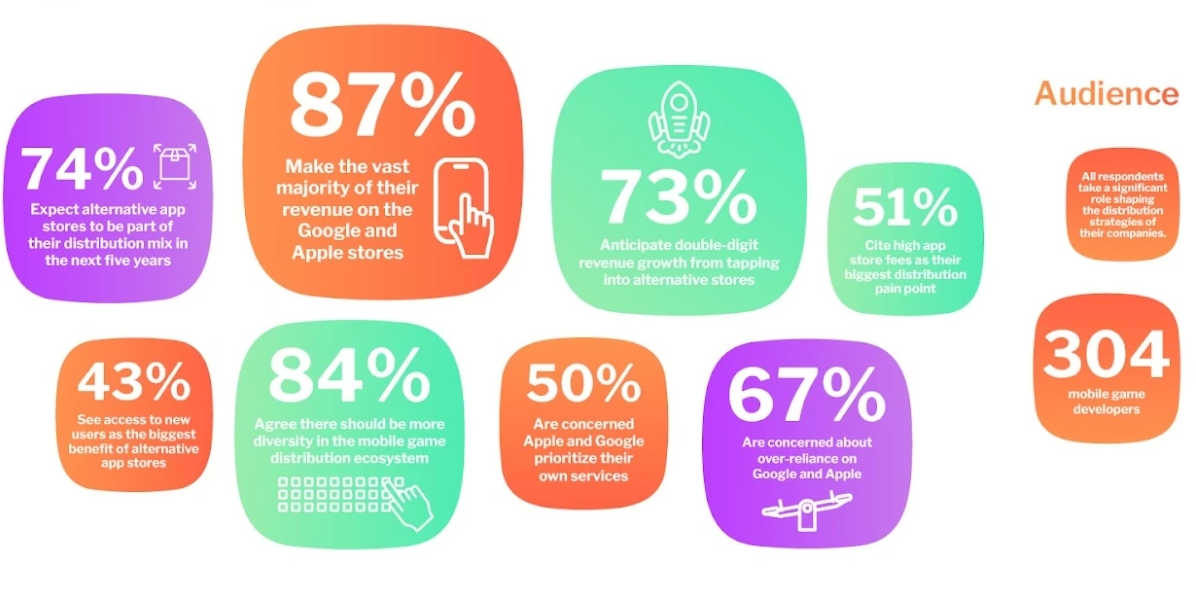
The survey depicts a stressful ecosystem: 67 per cent of developers expressed concern about the dependence on apples and Google, while 51 per cent were dissatisfied with the cost of high-level platform extraction and marketing. At the same time, 84 per cent of developers consider that the industry is not sustainable under the monopolistic pattern of these two main applications. The survey depicts a stressful ecosystem: 67 per cent of developers expressed concern about the dependence on apples and Google, while 51 per cent were dissatisfied with the cost of high-level platform extraction and marketing. The main pains of developers include high platform costs (51 per cent), rising marketing and client costs (46 per cent), rigid policy restrictions (44 per cent) and game exposure challenges (43 per cent).
Despite the challenges, developers still expect a multi-shop strategy. Seventy-three per cent of respondents felt that double-digit income growth was expected through access to alternative application shops and policy restrictions. Seventy-four per cent of the 300 senior practitioners from U.S.-British mobile games studios predict that alternative application stores will become a key component of the distribution strategy in five years. As Paul Tresentos, Chief Executive Officer and Co-founder of Aptoide, noted: “The ecological re-establishment of mobile games is urgently needed. The long-established two-headed monopoly continues to suppress the potential of business and creativity, assigning too many rules and drawing too much income. Our survey confirms that developers are ready to regain ownership and that alternative application shops are opening new opportunities — providing greater control, better economic models and undeveloped audience groups for game creators.”